
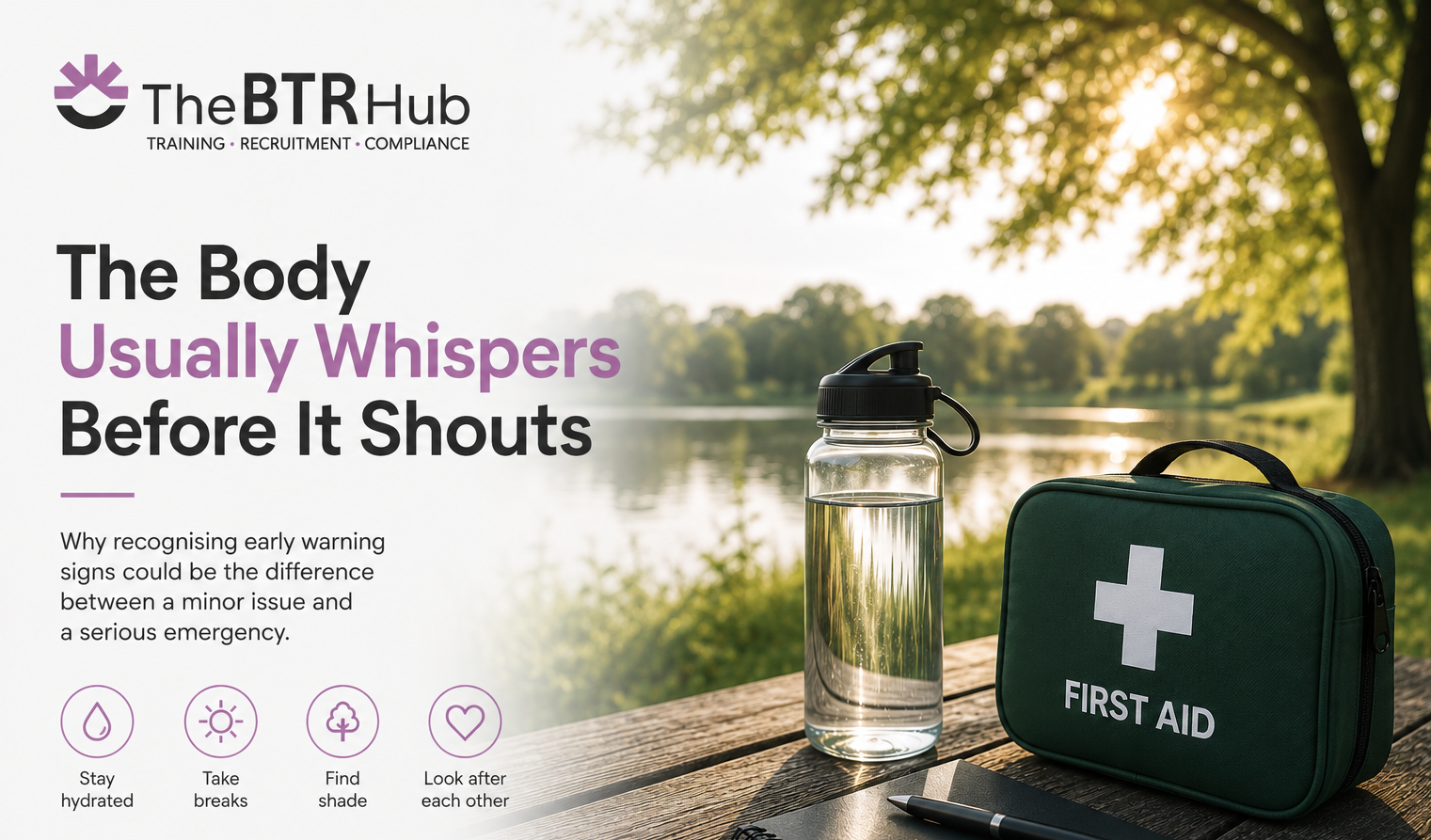
What the recent heatwave reminded me about first aid, judgement and listening to ourselves.
Every first aid trainer has moments that stay with them.
Not because of the CPR.
Not because of the defibrillator.
Not even because of the dramatic stories that often make the headlines.
The moments that stay with me are usually much quieter.
They’re the ones where someone says:
I thought I was just tired. I didn't want to make a fuss. I thought it would pass.Those words have probably been spoken thousands of times before an ambulance has been called.
And they highlight something I’ve come to believe after years of working in training.
The body usually whispers before it shouts.
We don’t ignore warning signs because we’re careless.
We ignore them because we’re human.
Life is busy.
There’s another meeting to attend.
Children need collecting.
The emails keep arriving.
There’s always one more job to finish.
So when our body tells us something isn’t quite right, our instinct is often to explain it away rather than investigate it.
It's probably just stress. I'll have another coffee. I'll feel better tomorrow.Most of the time, we’re right.
Sometimes, we’re not.
The heatwave is a perfect example.
As temperatures have climbed over the past few days, we’ve all been reminded to drink more water, wear sunscreen and stay out of the midday sun.
Good advice.
But what interests me isn’t the weather itself.
It’s how easily people dismiss the early signs that they’re becoming unwell.
A headache.
Feeling unusually tired.
Dizziness.
Irritability.
Difficulty concentrating.
These symptoms rarely arrive all at once.
They appear quietly.
Individually.
Almost politely.
By the time someone accepts that something is genuinely wrong, what started as dehydration may have progressed to heat exhaustion, and in some cases, something much more serious.
First aid begins long before an emergency.
When people think about first aid, they often picture CPR.
And rightly so—CPR saves lives.
But one of the greatest lessons first aid teaches us is that many emergencies can be prevented from becoming critical if someone recognises the warning signs early enough.
Sometimes first aid is simply:
Stopping.
Drinking some water.
Finding some shade.
Checking on a colleague.
Asking someone if they’re OK.
Or listening when your own body asks you to slow down.
Those aren’t dramatic interventions.
But they can be incredibly important.
Perhaps this lesson goes beyond first aid.
The more I think about it, the more I believe this principle applies to many areas of life.
We ignore stress because we think we’ll deal with it next week.
We ignore exhaustion because other people are relying on us.
We ignore difficult conversations because they’re uncomfortable.
Small problems have a habit of becoming bigger ones when they’re ignored.
The body isn’t the only thing that whispers before it shouts.
Life does too.
A thought to leave you with
The current heatwave will pass.
Another season will arrive, bringing different challenges.
But the lesson remains the same.
Whether it’s our health, our wellbeing, or the people around us, paying attention to the early warning signs is one of the most valuable habits we can develop.
Sometimes the greatest act of first aid isn’t responding to an emergency.
It’s recognising that one is beginning.